
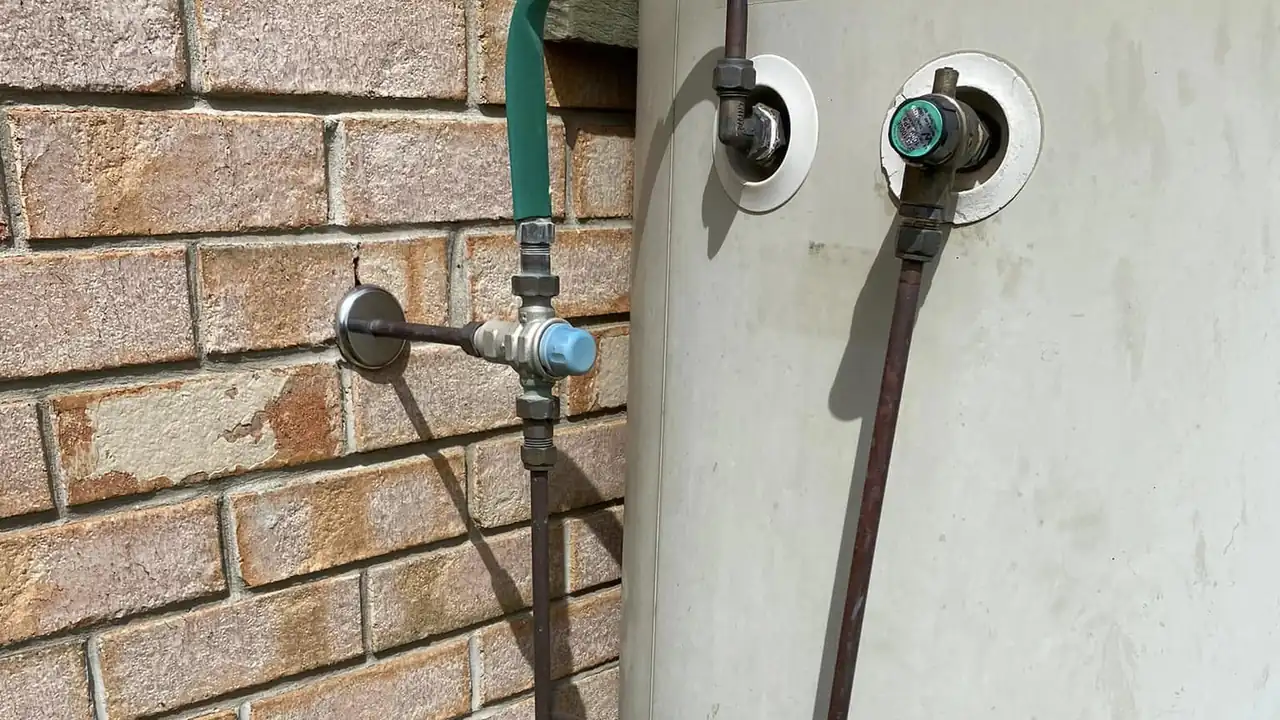
A tempering valve is a brass valve on your hot water line that mixes cold water into the hot, so the water at your shower, bath and basin never goes above 50°C. This guide is for homeowners and property managers around Ipswich, Springfield and Brisbane’s western suburbs who think theirs might be on the way out.
Most people only find out they have one when the shower turns lukewarm. Often the tank is still heating perfectly well and the tempering valve is the part that has quit, so it’s worth ruling out before you book a hot water system repair. Knowing the difference can stop you replacing a heater that still has years left in it.
What does a tempering valve do?
A tempering valve blends hot water from your tank with cold water from the mains, so bathroom outlets get water no hotter than 50°C. Your tank has to store water at 60°C or above to stop Legionella bacteria growing. The valve brings that down to a temperature that won’t scald.
Inside the valve sits a temperature-sensitive element. As the incoming hot water heats up or cools down, it expands or shrinks and slides a piston that lets more or less cold water through.
Those ten degrees matter. Water at 60°C can cause a third-degree burn in about one second, a figure the Queensland Government sets out in its guideline on installing temperature control devices. At 45°C, the same burn takes around six hours.
Young kids and older family members carry the most risk, because their skin is thinner and they react more slowly.
In Queensland, a tempering valve or another approved temperature control device must be fitted whenever a hot water system is installed for the first time or replaced, even with a like-for-like unit.
Where is the tempering valve on a hot water system?
On most houses, the tempering valve sits on the hot water outlet pipe close to the hot water unit, with a cold water pipe teed into one side. It’s a chunky brass fitting, usually marked H, C and M (hot, cold and mixed), with a plastic cap on top covering the adjustment screw.
In older homes it can turn up under the house or near the bathroom, and if the heater hasn’t been replaced in decades, there may not be one at all.
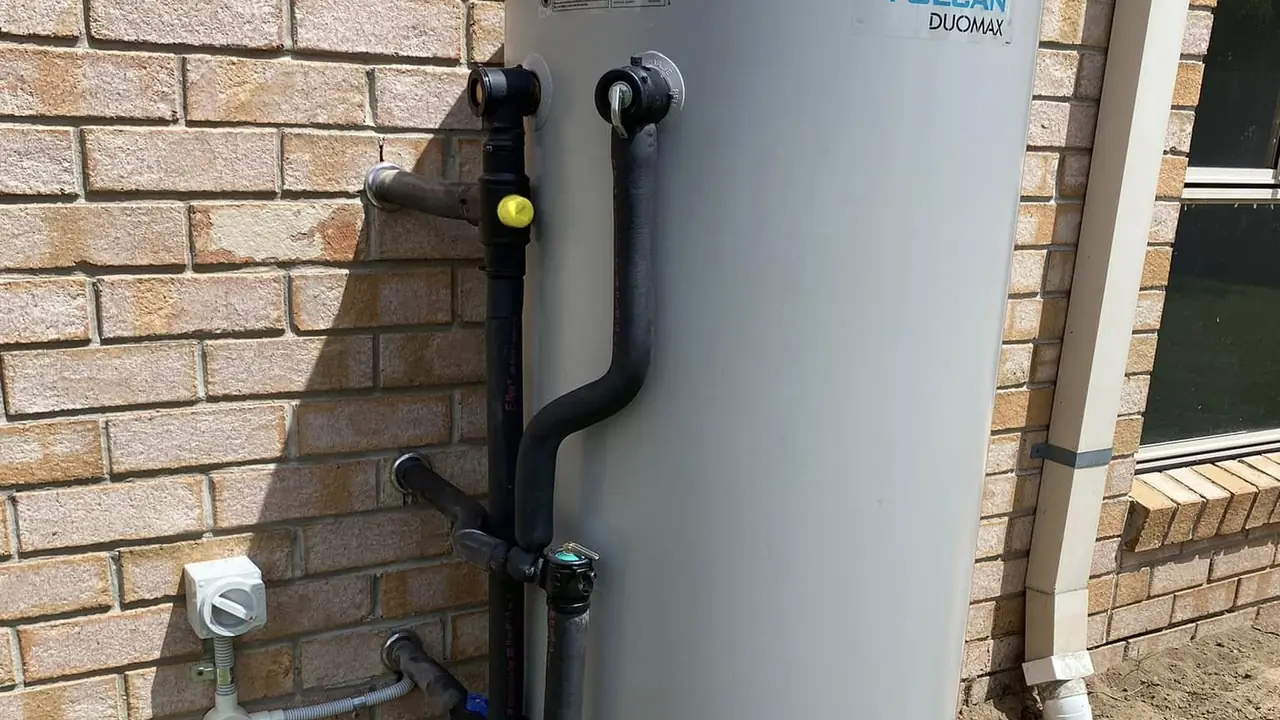
How do I know if my tempering valve is bad?
If your tank is heating but the water at your bathroom taps is lukewarm, swings between hot and cold, or comes out too hot, the tempering valve is the first thing to suspect. A dripping valve body or crusty build-up around the fitting points the same way.
Common hot water tempering valve problems include:
- Lukewarm water that never gets properly hot, even after the heater has had all night to recover.
- Temperature that jumps around mid-shower, often when someone flushes a toilet.
- Water that’s too hot at the basin. A valve stuck on the hot side is a scald risk, so treat this one as urgent.
- Weak flow from the hot taps while the cold runs fine. A blocked strainer is a common cause.
- Drips, a wet patch, or green and white crust around the valve body or cap.
- Warm water coming out of the cold taps. Worn non-return valves inside the tempering valve can let hot water cross over into the cold line.
One symptom on its own can sometimes be sorted with a strainer clean and a reset. Two or three together usually means the valve is worn out and needs replacing.
If the bathroom water is coming out too hot, don’t wait it out. Call us on 1300 852 837 and we’ll come and test the valve.
Tempering valve checks you can do yourself
A few things are worth ruling out first. None of them involve opening the valve.
- Check the heater itself. On an electric system, look at the switchboard for a tripped hot water circuit.
- On a solar system, a run of cloudy days with the booster switched off will leave you with warm water no matter what the valve is doing.
- Test the basin. Run the bathroom basin hot tap for a minute and test it with a cooking thermometer. A reading well above 50°C, or one that keeps drifting, points at the valve.
- Look for leaks. Check the valve and the pipework around it for leaks or corrosion.
Anything past these checks means opening the valve, and that’s a job for a licensed plumber.
Why a licensed plumber has to fit a tempering valve
Fitting or servicing a tempering valve is plumbing work under Queensland’s Plumbing and Drainage Act 2018, so it has to be done by a licensed plumber. It’s a safety valve, and the plumber who fits it is responsible for proving your bathroom gets water at 50°C or less.
That takes more than screwing a valve onto the pipe. The plumber picks a valve rated for your type of system, sets it, then tests the temperature at the outlets to meet AS/NZS 3500.4. Plumbers who ignore Queensland’s guideline can face disciplinary action.
Cleaning the strainer or swapping a cartridge falls under the same rules, because the valve has to be retested afterwards.
Can I adjust my tempering valve?
You can physically turn the adjustment screw under the cap, but we don’t recommend it. The valve is set at installation to deliver no more than 50°C to bathroom fixtures, and any tempering valve adjustment needs checking with a thermometer at the outlet afterwards.
When a valve that worked for years suddenly needs adjusting, the element is usually wearing out. A quarter-turn only hides the problem.
How often should tempering valves be replaced?
There’s no set replacement date for a tempering valve. Valve makers such as Reliance recommend checking it once a year, and it gets replaced when that check shows it can’t hold a steady, safe temperature. It’s also replaced during any hot water system replacement, because Queensland requires a compliant valve on every new or replacement hot water system.
A yearly hot water system service is the easiest time to have the valve looked at, since the plumber is already testing the relief valve and checking the tank.
Tempering valve vs thermostatic mixing valve
Both valves blend hot and cold water, but a thermostatic mixing valve is the more precise of the two. It holds the outlet temperature tighter and cuts the flow to a trickle if the cold supply fails. Homes normally use a tempering valve set to 50°C, while thermostatic mixing valves suit places that need 45°C.
Queensland requires that 45°C limit in aged care, early childhood centres, schools and health care buildings, and there only a thermostatic mixing valve or thermostatic tap will do. They also need more regular checks, which we cover in our guide to maintaining your thermostatic mixing valve.
Tempering valve repairs and replacement in Ipswich and Brisbane West
Our team brings more than 30 years of plumbing experience to hot water jobs across Ipswich, Springfield and Brisbane West. We test the valve and tell you straight whether it needs a clean or a full tempering valve replacement.
You get upfront pricing before any work starts, and same-day service wherever possible.
We’re QBCC licensed (licence 1534253) and a member of the Master Plumbers Association of Queensland. Call 1300 852 837 or book your tempering valve check online and tell us which symptoms you’ve noticed.