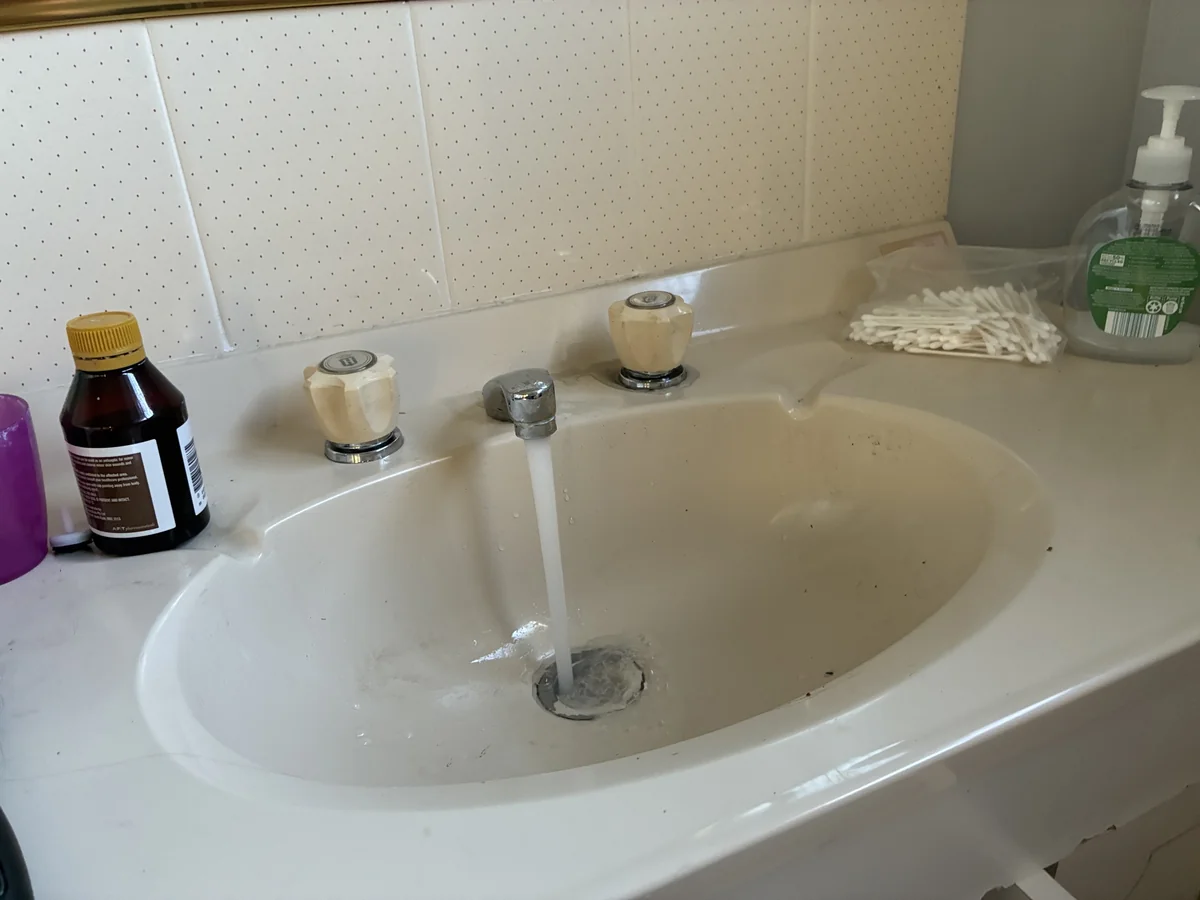
This guide shows you how to fix a leaking tap at home, and how to tell when the washer isn’t the real problem. It’s for homeowners across Ipswich, Springfield and Brisbane’s western suburbs, where leaking taps are some of the most common jobs in our plumbing maintenance and repair work.
The short version: turn off the water, take the tap apart and replace the worn washer or jumper valve inside. That fixes most older taps with separate hot and cold handles. If a new washer doesn’t stop the drip, the seat, the ceramic cartridge or an O-ring is usually behind it, and each needs a different fix.
Work out where the tap is leaking first
Watch the tap for a minute first. Where the water comes out tells you which part has failed, and it’s worth sorting soon, because small leaks cost more the longer they run.
- A drip from the spout with the tap off usually means a worn washer or jumper valve on an older tap. On quarter-turn and mixer taps, it points to the ceramic cartridge.
- Water seeping around the handle while the tap runs means the spindle O-ring has gone hard or flat.
- Water pooling around the base of a kitchen mixer spout comes from worn O-rings inside the swivel base.
- Water in the cupboard under the sink is a loose nut or perished flexi hose, not the tap.
Check which type of tap you have
Taps come in two broad types, and the fix for a dripping tap is different for each.
Compression taps are the older style. The handle takes several full turns and gets firmer as you close it, because a rubber washer is pressing down onto a brass seat. A new washer usually solves the drip.
Ceramic disc taps and most single-lever mixers open with a quarter or half turn and stop hard at each end. There’s no washer inside. When these leak, the cartridge has worn and needs a matching replacement for that brand and model.
How to fix a leaking tap by replacing the washer
In Queensland, changing a tap washer or jumper valve is one of the few plumbing jobs a homeowner can do without a licence. The Queensland Building and Construction Commission lists the plumbing work you can legally do yourself in its DIY guide. Anything beyond that list needs a licensed plumber.
You’ll need an adjustable spanner, a screwdriver, a new washer or jumper valve, silicone tap grease and an old tea towel.
- Turn off the water. Use the isolation valve under the sink, or the main at the water meter near the front boundary.
- Open the tap to drain the line, then put the plug in. Small screws love disappearing down the drain.
- Prise off the hot or cold cap on top of the handle, undo the screw underneath and pull the handle off.
- Wrap the tea towel around the tap body to protect the chrome, then undo the brass headgear with the spanner while your other hand holds the tap steady.
- Pull out the jumper valve, which has the washer on its base. Replacing the whole jumper valve is often easier than prising off the old rubber.
- Look down into the tap at the brass seat. It should be smooth and even. A groove or pitting means a new washer won’t last.
- Smear a little silicone grease on the spindle threads and O-ring, then refit the headgear and handle.
- Turn the water back on slowly and check for drips at the spout and around the handle.
Take the old washer with you to match it, as the wrong size won’t seal. Then close the tap firmly and stop there. Cranking it shut flattens a new washer in weeks, and it’s the most common reason a freshly fixed tap starts dripping again.
When it’s not the washer
If you’ve fitted a new washer and the tap still drips, one of these is usually the cause.
The tap seat is worn or pitted
The seat is the brass ring the washer closes onto. Grit and years of the tap being forced shut wear a groove into it, so water slips past even a brand new washer. A plumber re-cuts the seat with a reseating tool or fits a new one. A seat ground unevenly by hand leaks worse than before, so leave this one to us.
The ceramic cartridge has failed
Quarter-turn and mixer taps drip when the ceramic discs inside are chipped or have grit stuck between them. Rinsing the cartridge sometimes works, but usually it needs replacing. Cartridges are brand specific, so take the old one with you when you buy.
The tap is leaking from the handle
Water around the handle or spindle while the tap is running means the spindle seal has worn, not the washer. On most taps that’s a small O-ring on the headgear. Swap it while the tap is apart and grease the new one. On older taps with gland packing, nipping up the gland nut a quarter turn can stop it.
The mixer tap is leaking from the swivel base
A kitchen mixer with water pooling around the base of the spout has worn O-rings inside the swivel. Every swing of the spout wears those rings flat. Undo the grub screw or collar, lift the spout off and fit a matching O-ring kit.
When to call a plumber for leaking tap repair
A washer change is a fair DIY job. These situations are better handed to a licensed plumber:
- The headgear won’t budge, or the tap body turns with the spanner. Forcing it can crack the pipe behind the tiles.
- The isolation valve or main is seized solid and won’t shut the water off.
- You’ve replaced the washer once already and the drip is back within weeks.
- The tap won’t close at all. That’s a different fault, and our guide on why a tap won’t turn off explains what’s happening inside.
Stripped threads from a stuck tap feature in our list of DIY plumbing mistakes that cost more to fix
If you’re in Ipswich, Springfield or Brisbane’s western suburbs, call us on 1300 852 837 or book a quote for your tap repair and send a photo of the tap. We’ll give you the price before we start. If a new seat or cartridge will fix it, we’ll tell you that rather than sell you a new tap you don’t need.
Frequently asked questions
How do I fix a tap that is leaking from the top?
Replace the O-ring on the spindle. Turn off the water, take the handle off and undo the headgear, then roll the old O-ring off and fit a new one the same size. A thin smear of silicone tap grease helps it seal. On older taps with gland packing, tightening the gland nut slightly can stop the leak.
Why is my tap still dripping when I turn it off?
A worn washer is the usual cause, but if you’ve already replaced it, the tap seat is probably damaged. Grit and overtightening wear a groove into the brass seat, so water slips past even a new washer. On quarter-turn and mixer taps, a worn ceramic cartridge causes the same drip.
How can I stop a water leak from my tap?
Turn off the isolation valve under the sink, or the water main at the meter, to stop the leak straight away. Then find where the water is coming from. A drip from the spout points to the washer or cartridge, while water around the handle points to a worn O-ring on the spindle.
Do I need a plumber for a dripping tap?
Not always. In Queensland a homeowner can legally replace a tap washer or jumper valve, and that fixes most drips on older taps. Call a licensed plumber if the seat is worn, the headgear won’t budge, or the drip comes back within weeks of fitting a new washer.
What can I use to seal a leaking tap?
It depends on where it leaks. Thread tape suits threaded connections under the sink, and silicone tap grease helps O-rings seal around the spindle. Nothing seals a worn washer or damaged seat from the outside, so a drip from the spout needs the worn part replaced, not taped or glued over.